The political and horizontal activities of ANEC focus on:
- our contribution as an “Annex III Organisation” to the implementation of Regulation (EU) 1025/2012 (including the EC Committee on Standards; EC Annual Union Work Programme for European Standardisation; Joint initiative on Standardisation)
- enhancing consumer participation in standardisation
- the training of consumer experts and consumer representatives
- participation in the governance of the European Standardisation Organisations
- our contribution to the European Consumer Agenda
- strengthening the framework for market surveillance and enforcement
- strengthening the framework for the safety of consumer products
- communications, events and dissemination of information
- collaboration with our sister organisations: BEUC, Consumers International, ICRT
News and recent success stories
New ANEC Statutes
The second day of the ANEC/GA meeting on 15 June 2022, was preceded by an Extraordinary General Meeting (EGM) of the Association to adopt new Statutes. Aimed at strengthening the governance of ANEC, the new Statutes also ensure compliance with the Belgian Companies & Associations Code of May 2019.
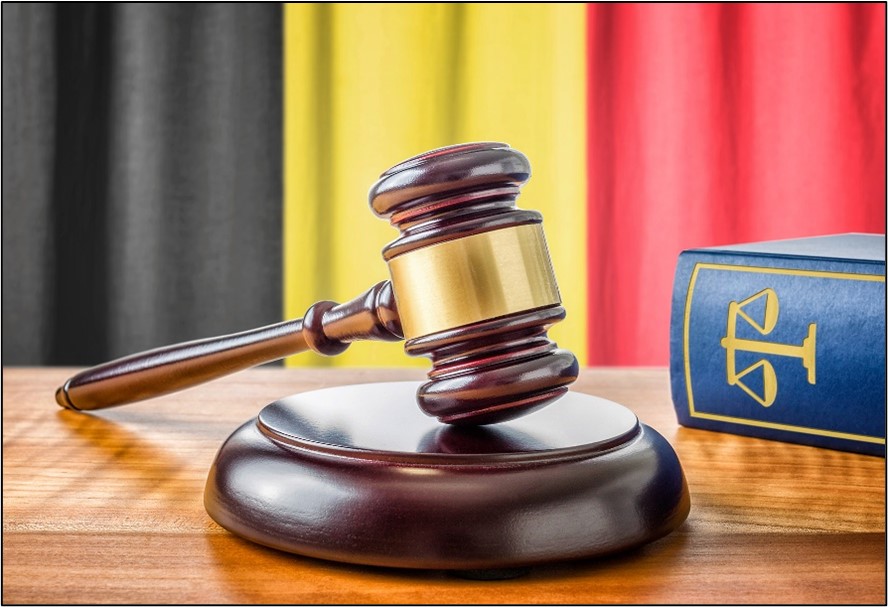
Most visibly, the Statutes change the legal title of ANEC to the European Consumer Voice in Standardisation, a title used informally in recent years. Another visible modification changes the lead executive to a Director-General, with legal responsibility for the day-to-day affairs of the association. The adoption of the Statues took place in the presence of notary public, Frédéric de Grave.
In welcoming adoption of the Statutes, President Dermott Jewell thanked the ANEC Steering Committee members for helping guide their drafting, as well as EY Law for their professional advice.
European Commission’s Standardisation Strategy
The European Commission published its long-awaited Standardisation Strategy on 2 February 2022, which it trusts will underpin “the EU’s role as a global frontrunner in the development of standards, supporting EU values and providing industries with a competitive edge”.
ANEC Secretary-General, Stephen Russell, welcomed the Strategy and its ambitions to help the EU deliver the green and digital transitions, as well as supporting the resilience of the European single market. He said, “In its comments on the Roadmap for the Standardisation Strategy, ANEC stressed the need for a high-level group to build and maintain a new dialogue between the EC and the stakeholders of European standardisation. We are therefore delighted to understand that the EC will create a High-Level Forum to ensure European standardisation meets the needs to make the EU economy greener, digital and resilient. Prior to the COVID-19 pandemic, consumer spending accounted for 54% of EU GDP, and so it is essential consumers are at the heart of discussions on the twin transitions, and on how standards can support those transitions to the benefit of both business and society”.
The Strategy also foresees the creation of an EU excellence hub on standards to provide a focus for standardisation expertise within the EU Institutions and Member State authorities, with the work of the hub being steered by a new Chief Standardisation Officer, nominated by the EC. It also looks to safeguard European values and ethics in standards key to the European interest, and invites CEN, CENELEC and ETSI to make proposals by the end of 2022 on the modernisation of their governance to safeguard the public interest and that of society.
Commenting further, Stephen Russell said,
“The requirement for the European Standardisation System to be inclusive is unique in the world and is worth reinforcing. A product or service that complies with an inclusive standard not only benefits European society, but provides European business with advantage on the global stage. We also welcome the EC recognising the need to protect European values in the development of standards critical to the consumer interest (such as cybersecurity) and look forward to working with the EC to achieve this, particularly noting the wish of business to align with international (ISO/IEC) standards whenever possible”
The Strategy is accompanied by the Annual Union Work Programme (AUWP) for 2022 and the latest Article 24 report from the EC under the provisions of Regulation (EU) 1025/2012, the Standardisation Regulation.
e-Learning course updated!
The free online course, ‘Societal Stakeholders and Standards’, was revised in November 2021. It is intended to explain the complex world of standards in clear and simple terms, with its modular approach complemented by self-tests at the end of each module. Please visit the course at www.standards4all.eu.
The course contains seven modules to help users learn about standards, their development, and the important role they play in protecting consumers, workers, and the environment. It further demonstrates the importance for civil society to engage in standardisation in order to improve, strengthen and add legitimacy to the European Standardisation System. The course was developed by ANEC, its societal peers ECOS and ETUC, and CEN-CENELEC and first launched in 2018.
ANEC/BEUC comment on revision of GPSD
In October 2021, ANEC replied to the EC public consultation on the revision of the General Product Safety Directive (GPSD). It was drafted with BEUC through our joint WG on product safety. In November 2021, ANEC and BEUC published a common position paper (https://bit.ly/3qYuXsw), as an update to our earlier recommendations on the development of the General Product Safety Regulation, taking into account the draft legislation as well as its impact assessment.
We welcomed the proposal, as it takes into account many of our recommendations with regard to improving market surveillance and better addressing new technologies. However we have some recommendations for consideration in the upcoming negotiations: the role of online marketplaces in the supply chain must be acknowledged: their status and obligations must be those of importers to make sure they can be ultimately held liable for product safety violations; the safety net function of the current legislation framework needs to be safeguarded; a proper system of accident and injury data collection must be established; the use of more rigorous conformity assessment modules than the manufacturer’s self-declaration must be allowed for certain, higher-risk products; the co-legislators should ensure the EC will be given power to adopt specific implementing measures in support of improved consumer protection and welfare.
We were pleased to see that our comments were taken into account by the EP JURI Committee opinion. Also, we were pleased to see that the Council Progress Report on the GPSR reflected our position about the aspects of assessing the safety of a product and the priority order of the criteria for assessment.
Previously, in August 2020, ahead of the expected revision of the General Product Safety Directive (2001/95/EC), together with BEUC we have published a position paper on how the revision should contribute to higher levels of consumer protection in the EU. The paper can be found at https://bit.ly/32up0Wj.
The GPSD has proved a fundamental piece of consumer protection legislation. It established the obligation on producers to place only safe products on the market, beyond the product-specific legislation of the New Approach. In practice, this means the GPSD is the main safety law for commodities as diverse as furniture, textiles and child-care products. But, it has become outdated, having been adopted in 2001.
ANEC response to EC consultation on the Roadmap for the Standardisation Strategy
ANEC welcomes the wish of the European Commission (EC) to develop a Standardisation Strategy. Hence, on 9 August 2021, ANEC submitted a response to the EC consultation on the Roadmap for the Standardisation Strategy.
A few of the key messages we highlighted in our response:
Consumer spending constituted 54% of EU GDP before the pandemic and hence the needs of consumers must be central to EU policies, with the ESS effective in responding to these needs.
ANEC supports creation of a high-level group to build and maintain a new dialogue between the EC and stakeholders of European standardisation. This should look to avoid fundamental difficulties (such as citation of Harmonised Standards) in the implementation of legislation or policy.
ANEC trusts the High-Level Task Force created by the EC and the ESOs will come forward quickly with effective and lasting solutions that allow the timely citation of Harmonised Standards. It is vital for all stakeholders in the ESS that industry maintains its confidence in European standardisation and does not look to other solutions.
ANEC agrees with the EC interpretations of the Amstar and James Elliott rulings. We trust a further consequence will be that the EC ensures a similar implementation of other provisions of the Regulation, such as those of Article 5 on deepening inclusiveness.
ANEC does not believe a revision of Regulation (EU) 1025/2012 is needed. Instead its implementation should be improved, especially in the obligations on Member States to provide the political and financial frameworks needed at national level to ensure the participation of all stakeholders in European standardisation.
The full ANEC response can be found at https://bit.ly/38A8tDQ.
Regulation on machinery products
During August 2019, ANEC contributed to a public consultation on the possible revision of the Machinery Directive (2006/42/EC), the second phase of the review process announced by the European Commission (EC) at the beginning of 2019.
During the consultation, we stressed the need to update the Directive to improve safety levels further and take account of the latest IT innovations, addressing aspects related to emerging digital technologies (e.g. AI, cybersecurity, IoT). Moreover, we proposed to add accessibility requirements in the Directive, and to make reference to the UN Convention on the Rights of Persons with Disabilities (mirroring the Lifts Directive, for example). Furthermore, we reiterated our long-held concerns about the continued absence of a European legal framework for fairground & amusement park equipment.
Over the years, the concept and design of amusement park equipment has evolved, leading to bigger, and more exciting (but more hazardous) attractions. Unfortunately, there remain instances of very serious accidents. Noting the growing popularity of e-scooters, we believe the Machinery Directive could be used to address some of the risks arising from use of these vehicles. For example, the possibility to introduce an Acoustic Vehicle Alerting System (AVAS), similar to that for hybrid or electric cars.
Our final points touched on sustainable consumption. We asked for the revision to consider the renting of machines (e.g. DIY tools) by consumers. For fuller information, see https://bit.ly/2m04Z8G.
Ahead of revision of the Machinery Directive (2006/42/EC), we have issued a position focusing on the need to take into account technological developments in security and AI. In November 2020, despite several of our suggestions had been taken into account by the EC, we stressed again the exclusion of Fairgrounds (which we do not support) and the importance to offer both on-line and paper formats of all instructions for use (covering both safety but also maintenance for example). The outcome of the impact assessment study showed that the majority of interviewed stakeholders (including ANEC) agreed that the exclusion of fairground and amusement park equipment in the scope of the Directive should be removed.
On 21 April 2021, the EC published its proposal for a Regulation on machinery products (https://bit.ly/3i1VKyc). ANEC believes the Machinery Directive (2006/42/EC) has generally worked well in providing a sufficient level of safety for consumers in the EU, as well as aiding the free movement of machinery products. Nevertheless, the Directive needs updating to improve safety levels further, taking account of the latest IT innovations. As the Machinery Directive covers many consumer products, such as gardening equipment, it is vital for the proposed Regulation to ensure the same level of protection for consumers as for workers.
In a position paper published in July (https://bit.ly/2U3Ss5q), we welcome that several of our suggestions from last year have been taken into account in the proposal. We also give recommendations on provisions that need to be modified in the proposal in order to ensure the highest practicable level of safety for consumers.
We ask for fairground and amusement park equipment to be included in the Regulation, and for means of transport (such as e-bikes and e-scooters) to be included in this or dedicated legislation. The concept of foreseeable use should be used in determining whether a machine poses a high risk, and not only the intended use, especially for AI systems. In line with our first comments on the GPSR proposal, we believe a pan-EU accidents & injuries database, or a revitalisation of the European Injury Database (EU-IDB), is needed to assess whether a machine poses a high-risk to consumers. We believe escalators should be considered high-risks machines. The provision of instructions for use in electronic form (instead of hard copy) should be subject to a specific risk assessment by the manufacturer.
In July 2021 we submitted our position to the EC public consultation: https://bit.ly/3kcCNvb.
ANEC Vice-President appointed to represent ANEC in the CAG (ISO/COPOLCO)
We are delighted that Jens Henriksson, ANEC Vice-President and a long-standing member of COPOLCO, has been reappointed to represent ANEC in the CAG during its new term.
Apart from the participation of a limited number of representatives from the national standards bodies among the ISO membership, a select few seats have been made available to other organisations to ensure broad discussion and such is the appointment of the Vice-President of ANEC. In welcoming Jens’s appointment, ANEC Secretary-General, Stephen Russell, said “it is essential the consumer movement helps to guide ISO in its ambitions to address the environmental, technological and societal challenges now facing the world. The new CAG is a platform to do that and I welcome the appointment of ANEC (and Consumers International) to its membership”.

ANEC comments on standardisation rules
In September 2019, ANEC responded to a stakeholder consultation by the European Commission on draft guidance on practical aspects of the implementation of Regulation (EU) 1025/2012, known informally as the “Standardisation Regulation”.
Our comments focused on Standardisation Requests (SReqs) and the procedure for resolving Formal Objections. We believe there is need for a clear and precise definition of the temporal validity of SReqs. Regarding Formal Objections, we commented that the process takes too long and can lead to misunderstandings among stakeholders (including the Member States and ESOs). Hence we proposed deadlines for the procedure (and revision of related standards).
Strengthening the framework for market surveillance
On 14 June 2019, the Economic & Financial Affairs Council approved Regulation (EU) 2019/1020 on the market surveillance and compliance of products, confirming the agreement of the European Parliament (EP). The new rules will apply two years from the date of entry into force. A number of provisions will however apply as of 1 January 2021.
ANEC believes that the legislation will strengthen market surveillance and contribute to consumer safety. We appreciate the provisions of the Regulation to enhance traceability in the supply chain and to improve the organisation and financing of market surveillance authorities. We also welcome the intensified checks on the safety of products sold online, and the facilitated reporting on accident & injury data at European level.